
For the past decade, sport fishing derbies have grown in popularity in Eeyou Istchee. Cree communities have gained positive benefits from these events fostering tourism and building community and inter-community relationships. However, concerns in regards to potential impacts of these events on our local fisheries, aquatic ecosystems and traditional practices have prompt the Cree Nation to engage communities in building awareness on the potential risks associated with these events.
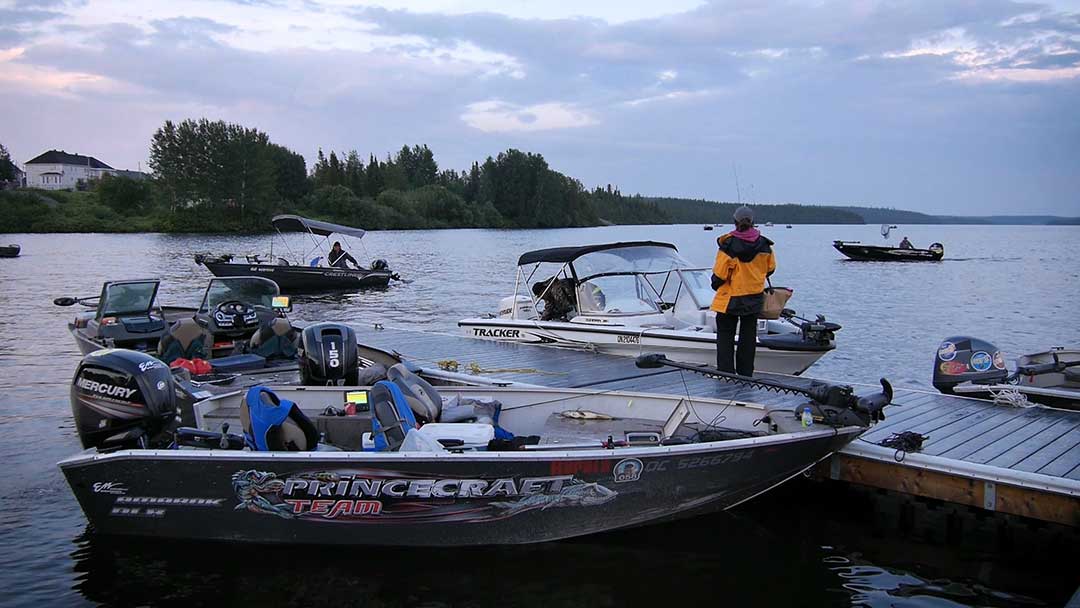
Fishing derbies organised in Eeyou Istchee have been known to attract over three hundred participants per event bringing fishermen from other regions and other provinces, thus acting as vectors for invasive species and increasing risk exposure to their introduction. To ensure the sustainability of these events, here are some recommended guidelines which the Cree Nation Government strongly encourage our fishermen, derby organizers, and communities to implement.
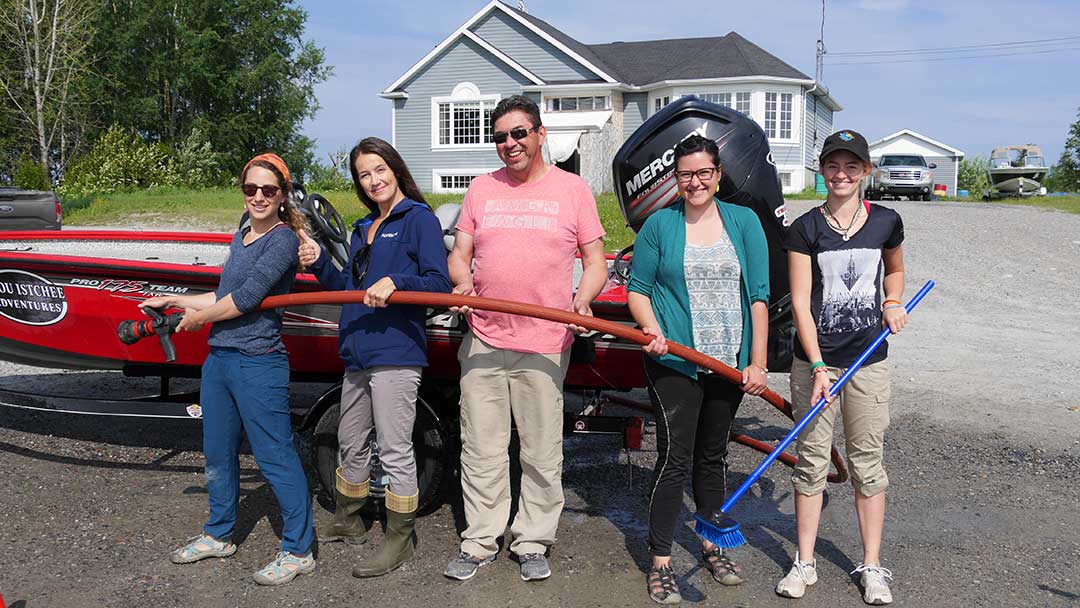
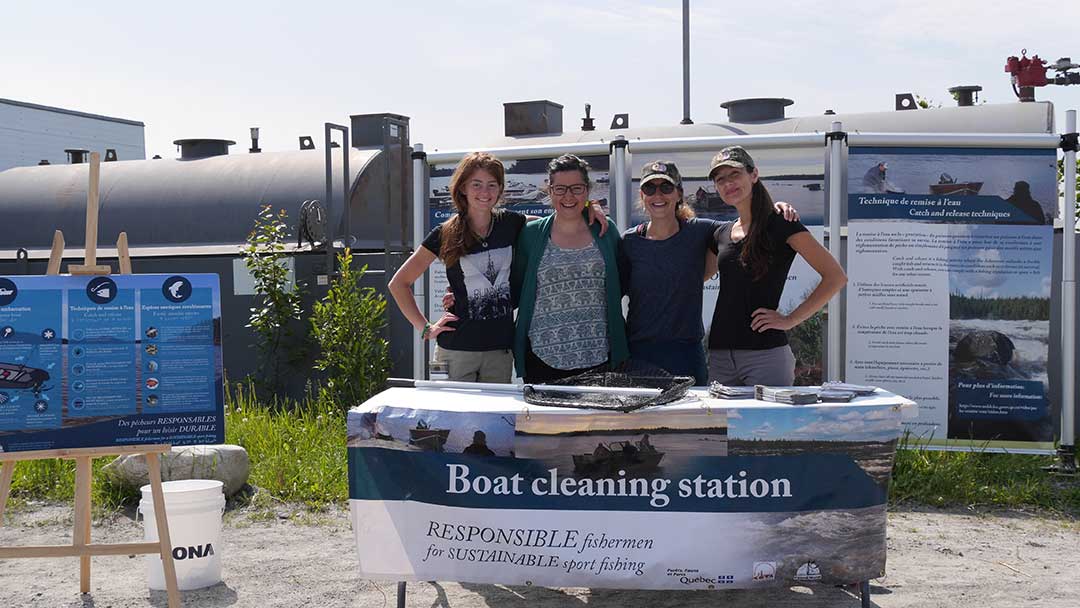
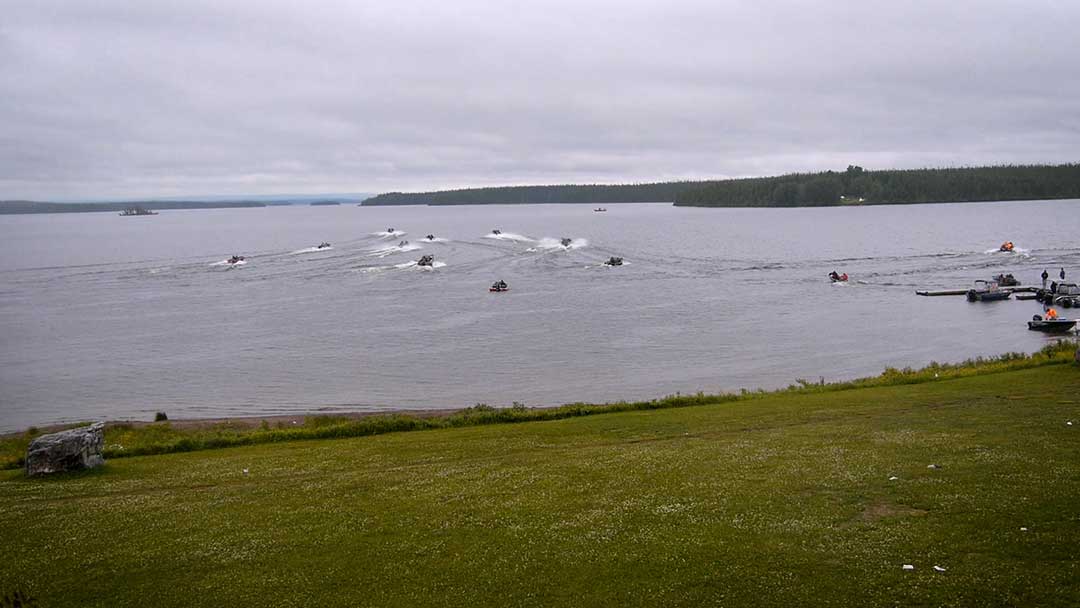
Our production journey began with a departure from Montreal on the morning of July 13, 2018, traveling alongside Nadia Saganash and Emile Sinave. Upon arriving in the community of Mistissini by late afternoon, our crew immediately mobilized to capture the essential foundational sequences featuring Stanley Mianskum. The subsequent days were dedicated to conducting in-depth interviews and securing comprehensive B-roll footage that captured the vibrant atmosphere in and around Mistissini Lake. The fishing derby itself saw an excellent turnout. Our team integrated seamlessly into the event logistics by setting up an information desk and facilitating boat washing services for vessels arriving from outside territories, which allowed us to visually document these critical biosecurity protocols firsthand. After wrapping the field shoot, we returned back to Montreal to assemble the final narrative. Throughout the editing phase, the collaborative guidance of Emily Sinave from the Cree Nation Government was instrumental in finalizing the cut. The completed public service video about sustainable fishing derbies was ultimately mastered and distributed widely on USB drives for accessible, free community outreach.
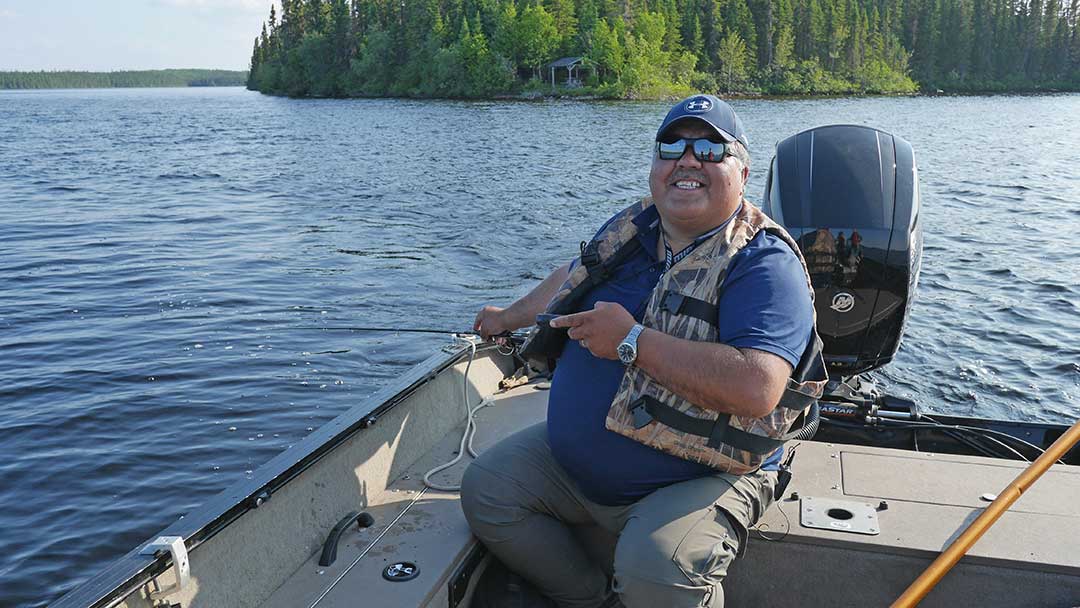
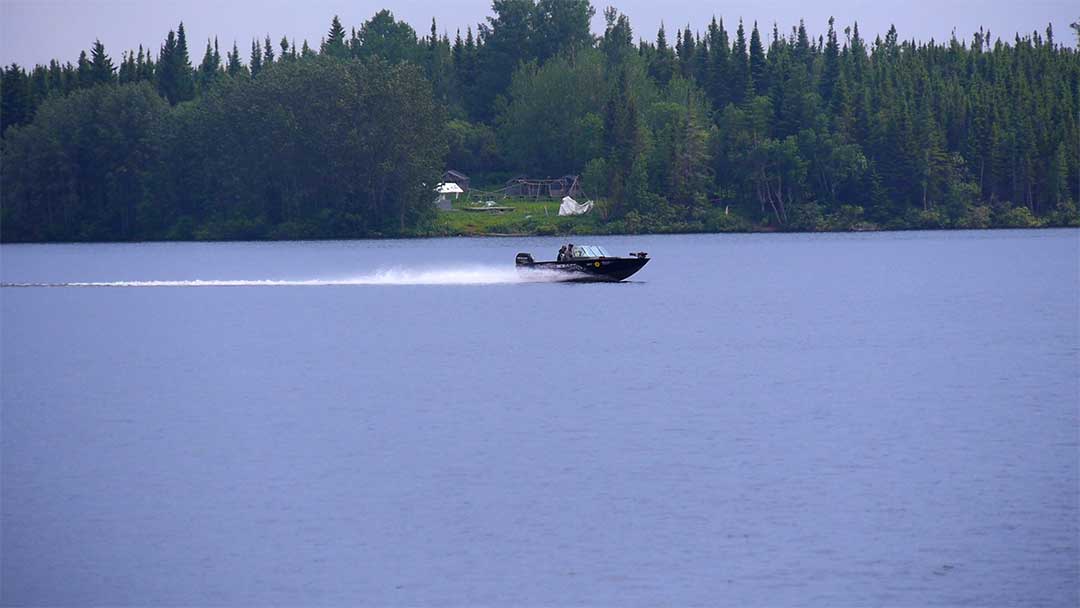
The “Fishing Derby – Best Practices” video addresses the growing popularity of sport fishing derbies within Eeyou Istchee, the traditional territory of the Cree of Eastern James Bay. While acknowledging the economic and social benefits of these events, the video highlights significant concerns regarding their environmental impact. The primary objective is to educate community members, youth, and visiting anglers on sustainable management and practical conservation steps to ensure the long-term health of the region’s aquatic ecosystems and the preservation of the Cree way of life.
To preserve the Cree way of life and ensure long-term sustainability, community leaders urge anglers to adopt the following conservation practices:
Eeyou Istchee is what we call “the Land of the People.” It is the traditional territory of our people known as the Cree of Eastern James Bay. Our territory, located in northern Quebec between the 49th and 55th parallels, expands over 170,000 square miles. From the dense forest to the taiga, from the high mountains to the immense lakes and powerful rivers, the territory of Eeyou Istchee abounds with numerous ecosystems rich in diversity. Since time immemorial, the land and waters of Eeyou Istchee, a place we call our home, have enabled us to live and survive to our existence today.
Whitney Blacksmith
It’s like all of our elders and our ancestors, we all give respect to the land and all our animals that we kill for us to eat. We always give thanks, and I think involving yourself around the environment, you’re going to notice every single importance of it. For our culture, it’s mostly all outdoors; we travel on foot, we canoe, we do everything that involves the environment.
Fishing has always been an important part of the Cree way of life. In the past, when wildlife resources were scarce, many Cree families escaped the fate of starvation as they could rely on the fisheries resources for their survival. Today, fishing still remains a strong part of Cree culture and activities, and many traditional sites and socio-cultural gatherings throughout Eeyou Istchee revolve around fisheries resources.
Thomas Coon
The fish itself was an important part of the Cree way of life and especially a very important food source in order for the Cree to survive. We have to remember days ago, years ago, our communities were unemployed. Unemployment is still high in the Cree communities, so it was these fish that kept them alive. So we must never forget the importance of fishing as part of the Cree survival, the Cree way of life, and Cree culture.
However, the land is changing, and our people are evolving. Pressures on the land are accumulating as accessibility and development continue to grow in the face of a changing climate. While we are still learning about the effects of these changes on the land and animals, our growing society is also changing and adapting.
William MacLeod
We are a growing community, with four thousand people here, and it is growing very fast. Many years ago, people did not have the types of boats that we have now. It only takes two hours to get to the north end (110 miles long), and you are at the spot fishing, or you can be at that spawning bed. That’s something that we have to be very careful about. We need to protect those areas; otherwise, we will not have the kind of fishing in the future for our children. We ourselves are hitting those areas too hard, and we are taking a lot of fish out of there.
William MacLeod
Conservation is written in the JBNQA as an issue; if the government feels we’re not following that, they can step in. It’s really up to us; we take that consideration ourselves and move on the conservation of wildlife. We take those steps and measures; we make those decisions.
There is now a growth in the tourism-related economy heightened by the quality of sport fishing available in the James Bay region. For the past decade or so, there has been a growing number of sport fishing derbies in Eeyou Istchee. The Cree communities have gained positive benefits from these events by appealing to tourism and by building community and inter-community relationships.
William MacLeod
Mistissini is known very well as a paradise for fishermen, so we have had a lot of people coming here, and they have been coming here for years.
Martin Boisvert
Ça fait une dizaine d’années que je fais des tournois autochtones. Je fais le tournoi ici à Mistissini, je fais Oujé ça fait 3 ans qu’ils le font, Waswanipi.
Martin Boisvert
Je viens dans le nord pour la qualité de la pêche.
Stanley Mianscum
Tomorrow is the day they will start the fishing derby here in Mistissini. I love seeing this being done, and people look forward to the derbies because, for some people, it is a way for them to meet new people and to see their friends from other communities—a time to enjoy what they love doing. They show each other how they fish, how to catch the big fish; they come from all over Eeyou Istchee, and some even come from the Lac St-Jean area. This is one way for our people to show our friends from other communities how and where we fish on our lake. When I see youth take their fishing rods and go out on the lake to fish instead of staying in town, it keeps them from getting into trouble; it’s peaceful, it’s healing, it’s fun.
However, concerns have been raised in regards to potential negative impacts on aquatic ecosystems and traditional practices. In 2017, the Cree Nation Government recorded over 25 fishing derbies in Eeyou Istchee, where some can attract more than 300 participants.
Thomas Coon
The elders are concerned about the fishing derbies, and we have to try to find a way how to manage the fishing derbies. We must not forget, the elders are not against the fishing derbies. It’s the way we do fishing derbies, the way we manage fishing derbies.
Whitney Blacksmith
We need to keep a balance if we’re going to introduce sport fishing derbies for our people here. I think it’s important to keep in mind it causes environmental impacts.
Dylan Fraser
Consequences of fishing derbies on fish populations.
Dylan Fraser
It could relate to the number of anglers associated with fishing derbies as well. You might have, for example, a few to several hundred participants within the fishing derbies in northern Quebec. If each day, individuals are keeping one or two fish in their live wells and bringing them back. Cumulatively over the course of a few days, you can easily have several hundred to potentially a thousand or more fish being brought in for the derbies. In some lakes, depending on the lake size and the characteristics, that could be a very substantial proportion of the adult fish within the population. So certainly, if there are impacts on the survival of those fish that are brought back, we must be conscious of the consequences it could have on the fish population and ecosystems.
In light of these concerns, how can we improve the management of fishing derbies to ensure their sustainability?
William MacLeod
A long time ago, all Crees, they managed their own lands; that is how they survived. So we have that knowledge, that responsibility to do the same thing.
Thomas Coon
People who are involved in fishing derbies were told two years ago at the CNG AGA to try to have manageable fishing derbies, to set some rules for fishing derbies, and to try not to have a large number of fishing derbies but have fewer fishing derbies. So each community who wants to participate can participate, but don’t organize so many fishing derbies for one community.
William MacLeod
Regulating is very important as well. The authorization has to come from the chief and council. We can’t have an open type of process where a group can decide; otherwise, it will get out of control. A formal process getting the right authorization—if you don’t, your conservation will go out the window.
Stanley Mianscum
They also have rules and regulations the fishermen have to follow, and when everyone follows them, everyone is happy, and the fishing derby is a success. This is what I hope for when they have the fishing derby.
Thomas Coon
So that’s one thing we should try to compile information on. So we will know exactly what the fish harvest is each year, so we will be able to manage based on these different activities. So we have to start collecting information and data and use it as a management tool so we can properly manage the fishing activity in Eeyou Istchee.
Dylan Fraser
How to improve the management, rules, and recommendations: consult the elders.
Catch and release practices, which consist of returning the fish to its habitat in conditions suitable for its survival, can help mitigate fishing derbies’ impacts on the fish population. However, catch and release has to be properly done in order to ensure the survival of the fish. Here are some catch and release best practices.
Isaac Voyageur
So this is one of the things that we thought about: there are elders who do not agree with fishing derbies, and there are people who really enjoy them. How can this be managed? One way is: when someone catches a big fish, they need to get it weighed as soon as possible so they can release their catch since they need big fish to win the derby. Big fish are more productive than the smaller ones; this is why we encourage fishermen to release them.
Stanley Mianscum
Most of the time, it’s catch and release. When we are looking for big fish, we have to be very careful when catching fish. Before you touch the fish, it is very important to wet your hands, and it is not recommended to hold the fish by the gills or its eyes. It is better to hold it from the bottom or the top because if you hold it by its eyes or the gills, you will hurt it. I always make sure I have pliers in hand because it’s easier for me to take the fish hook off the fish.
Thomas Coon
I prefer the single hook. There are some hooks that are double, and there are some that are triple. So for me, I would recommend the single hook to use in fishing derbies. It’s much easier to take off without hurting the fish. If the fish is caught on two hooks, either you tear one off when you try to take it off, or for sure you are going to hurt the fish. So single hooks I would highly recommend for fishing derbies.
Thomas Coon
Try to put the fish slowly in the water and right away. Don’t take it out of the water too long because the fish does not survive out of the water.
Stanley Mianscum
And another thing is, when they catch a fish from deep waters, sometimes it’s hard for the fish to release back into the water. When they release it too quickly, it doesn’t go down on its own because it has a hard time.
Dylan Fraser
I should mention that there are other potential impacts as well that are not necessarily direct ones to the fish, but they are indirect ones that actually have negative impacts on the ecosystems in the lakes where these fishing derbies are taking place. An obvious one would be the use of live bait within a derby. If there are fishes or worms or other types of live baits that are brought in from other geographic regions, this can transmit diseases to a local region or local lake that normally does not experience those species or types of organisms. It can also lead to the introduction of non-native species and have very detrimental consequences to those ecosystems down the line if some of those individuals of these non-native species survive and establish new populations. And finally, we can also transmit diseases and bring in non-native species through unclean boats. There are many different organisms that can be transported from the water of live wells or bilge pumps, and this could be a major problem for fishing derbies because people are moving around with their boats to different geographic areas and transporting water in between.
William MacLeod
But I am aware of the invasive species that can be brought into the lake. I have seen where that had really caused a lot of damage to the lake and fisheries in those areas, and I am glad that there is a process now where people are washing their boats and checking the boats as they’re coming from outside because it can really damage our resources. It’s also important to not bring other fish. The law still states that you cannot bring live bait, and I think that is good (minnows). Because most of the time people will dump them into the lake, and they will grow, and they’re not native to these areas.
Whitney Blacksmith
For the invasive species, it’s really important to clean up the boats and wash them because if invasive species are introduced to our lake, it could impact their food chain and decrease and decay our population of Walleye and pike. We try to catch the biggest fish, and I think the biggest fish are really important because they can carry a lot of eggs.
Simple steps to efficiently clean your boat to avoid the introduction of invasive species:
Avoid using live or dead baitfish since they are potential vectors for the propagation of invasive species and diseases, such as viral haemorrhagic septicaemia.
It is important to respect the land by keeping the environment clean.
Isaac Voyageur
Another subject we want to talk about is when there are a lot of fishermen on our lake, sometimes it happens that we see garbage floating out on the lake. So we encourage people not to throw their garbage overboard, to bring it back and dump it in the garbage cans.
William MacLeod
Respect the area; we have a lot of visitors, and even we ourselves must respect the environment here, the lake itself. I think we have to be very conscious of the fact that we need to bring our garbage back. I think that’s a very important aspect. That is what I would always promote myself. I do it myself. I promote it to my children, and I think everybody should be doing that as well.
Stanley Mianscum
The other thing that we can do to take care of our lake is to take garbage bags with us in the boat and not to throw our garbage in the water. If one person in a boat throws their garbage in the water, and another person on another boat throws their garbage, then the garbage accumulates, and we pollute the lake. So, therefore, it is better to bring the garbage with you and throw it in the garbage bin.
Often, lead sinkers and jigs are lost while fishing and can accumulate in lakes and rivers, representing a significant source of lead release in Canadian waters. Lead fishing gear can pose potential risks to wildlife, which include toxicity to birds and fish. The ingestion of a single lead sinker can be lethal for a bird such as the common loon. As fish can absorb lead from water and sediments, and waterfowl can be exposed by ingestion through the food they eat, consequently, the presence of lead in the environment can expose humans to severe health risks.
Paul Linton
People tend to have high blood pressure, pregnant women are at higher risk of losing their babies, and in small children, it could happen that they could lose their balance.
If the lead level in children goes over the average amount that is recommended, it can still affect them. It can affect their IQ levels, meaning it won’t be as high as other children with normal lead levels; they can become hyper and be more restless than other children. We can change this by using non-lead shells, such as steel shot shells, and by using non-lead sinkers and tackles for fishing. The way the lead hooks and sinkers affect a fish is that the lead goes into its bloodstream and eventually into its meat, and this is how people ingest lead.
Through many generations, our people acquired a wealth of knowledge and understood the very essence of living in balance with the land. Nothing was wasted, all was shared, and people harvested only what they needed to survive. These were the fundamental principles for showing respect for what the land provided.
Thomas Coon
Fishing is part of the components of the Cree way of life. We encourage young people to enjoy fishing and to go out to the lake, to be with nature.
Whitney Blacksmith
If we want to keep our culture strong and still continue giving that respect to the environment just to keep our culture going. And I feel like respecting the environment is one of the biggest parts of our culture.
Whitney Blacksmith
It’s amazing growing up to learn about the environment and still keep in touch with your culture because it’s just well blended together. I think that’s why I chose this career path: because of the environment, and how our culture is mostly outdoors and respecting our land and our animals, and how to shelter ourselves. It all involves the environment.
